

Article
As the experiences of India and the UAE suggest, attaining complete sovereignty is unrealistic for most nations. But that doesn’t mean they must depend on the United States or China.
Shreya Joshi
Source: Getty
The debate over AI and work too often centers on displacement. Facing aging populations and shrinking workforces, East Asian policymakers view AI not as a threat, but as a cross-sectoral workforce strategy.
The global debate around AI’s impact on the workforce—especially in the United States—falls on a spectrum of varying sentiments of pessimism to optimism. While many fret over displacement risks from automation and task substitution, optimistic groups predict job augmentation or even creation brought by AI.
East Asian countries fall in the latter group, as policymakers there believe technology can fundamentally help their society circumvent the structural constraints that threaten productivity in their economies. Shrinking workforces, skill mismatches, and political and legal constraints on immigration make it difficult for firms to find workers. Together, these produce policy challenges for countries to sustain productivity amid mounting geo-economic headwinds.
To overcome these constraints, many countries across East Asia are embracing AI as workforce augmentation by embedding AI in production, service, and training systems to reorganize labor as part of a broader workforce strategy. Building on strong legacies of state–private sector coordination, these governments are leveraging AI-enabled tasks to reallocate and augment increasingly scarce labor across sectors. In other words, AI governance is not only about technological innovation, but also a workforce enhancement strategy to counteract domestic and global constraints.
As will be discussed in the case studies that follow, East Asian governments—South Korea, Japan, China, Taiwan, and Singapore—have developed programmatic agendas to advance the concept of an “AI society.” In this view, AI-enabled systems are treated as technologies that can fundamentally reshape their social and industrial structures while addressing uneven displacement pressures across sectors—leading to socioeconomic transformation that can benefit workers across sectors and classes if deliberately managed by states, firms, and societies.
This article is not suggesting an East Asian model of AI workforce development. Instead, the governments all exhibit a shared forward-leaning orientation toward AI-enabled work, motivated by their patterns of labor constraint across sectors. This reframing adds another dimension to the debate from how AI alters work to how AI-enabled systems can reallocate or enhance scarce labor in response to labor market changes and demographic constraint. Moreover, the states, firms, and societies view productivity from AI gains emerging as one outcome of a broader economic governance framework rather than the sole objective.
Understanding why and how East Asian governments have adopted a forward-leaning approach to AI-augmented workforce development requires broadening our lens of contemporary workforce challenges. For many nations, AI is not a panacea that solves all labor challenges or an existential threat to the workforce, but an instrument to leverage existing supply of human labor under conditions of scarcity and constraint.
The mainstream conversation in the United States about the threat of AI on workers highlights the impact on the knowledge economy or office work rather than the job market as a whole. Importantly, the focus on generative AI and work, risks underestimating the possibility of AI-enabled systems that can enhance physically demanding jobs in manufacturing, agriculture, or lower-paid service jobs.
In fact, several structural dynamics shape how AI interacts with labor markets under conditions of constraint. First, economic restructuring, especially pronounced in East Asia, has led to divergent demand gaps in different labor sectors over the past two decades, as demand has remained strong in services, trades, manufacturing, and agricultural work even as the long-run increase in tertiary education has expanded the supply of advanced degree-holders. These concurrent trends produce a mismatch between where workers are trained to go, where they want to go, and where labor is still needed.
Across different labor segments—knowledge work, services, skilled trades, and production work—the effects of AI on the labor force varies today and will continue to diverge in the future given the ability of AI to replace or augment tasks. As a result, AI systems shape not only how and which tasks are substituted, but also how labor can and will be allocated across sectors and constrained by demographic and institutional limits.
If we understand the goal of AI to improve efficiency and efficacy, then it—along with its companion technologies automation and robotics—reduces the human labor inputs needed for some tasks. Rather than focusing only on foundational or frontier models, AI also comprises important applied uses to aid specific tasks in all labor sectors—in this sense, augmenting certain work to improve productivity rather than a wholesale substitution of human labor.
At an even more essential level, East Asian nations are confronting the challenge of shrinking workforces amid rapid demographic aging, meaning the people growing up today cannot replace the diverse number of workers that are retiring.
Countries have used targeted immigration to fill labor gaps for roles that citizens do not want. But even though immigration can be rapidly responsive to market demands, it is notoriously politically charged—and the new demographic and economic reality is that countries will also be competing for the same immigrants across the labor market.
With these constraints in mind, the core challenge for nations and firms is not only to find the best workers, but also to find workers at all. In this sense, countries do not have a labor displacement problem per se—they face a labor allocation problem.
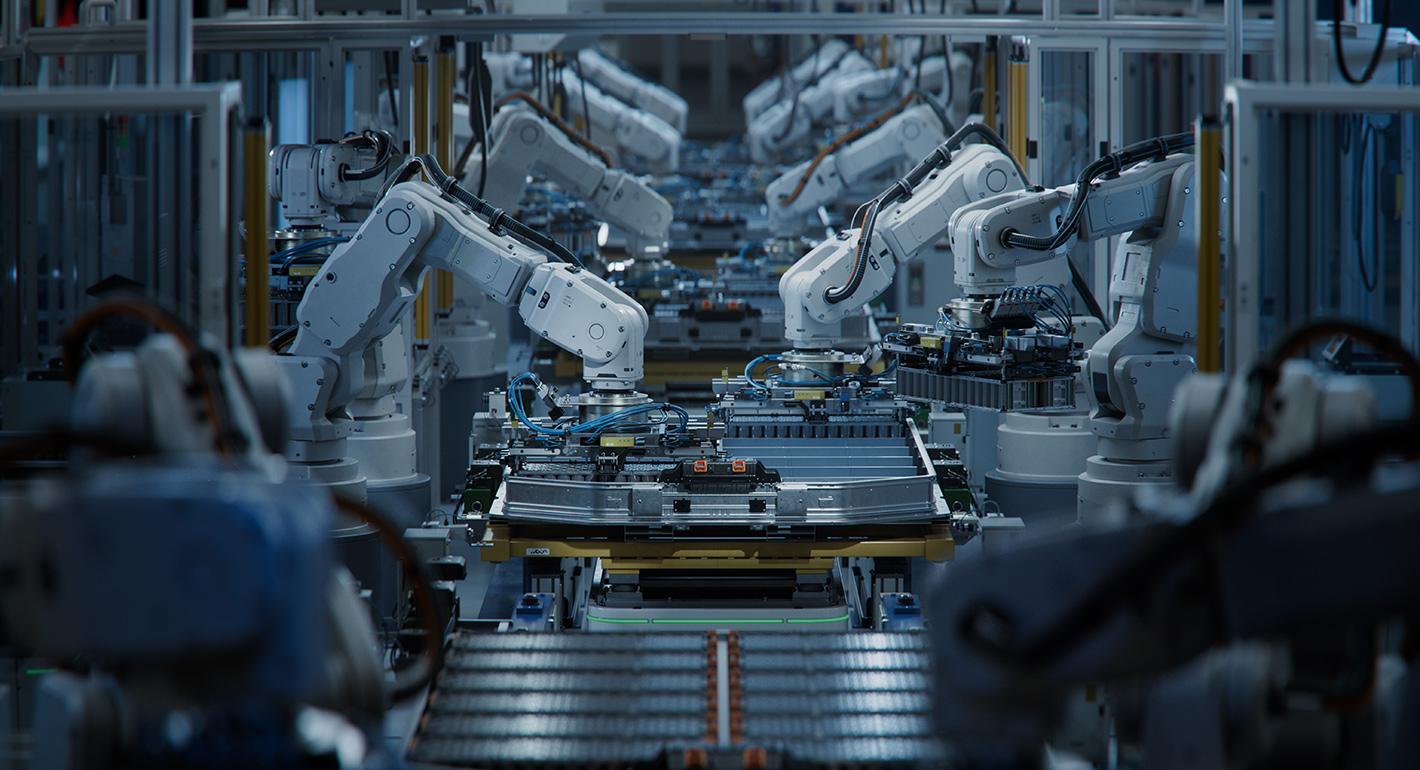
Responding to the allocation constraints outlined above, countries with aging populations are embracing what policymakers and scholars describe as the Fourth Industrial Revolution (4IR): a reorganization of work across human and machine systems, including not only AI but also robotics, automation, and the Internet of Things (IoT). In this context, AI-enabled work systems function less as standalone technology but part of a network of technologies that are reshaping how workers are deployed, augmented, and reallocated under constraints.
At their core, countries aiming for an AI society leverage new technologies to boost human capabilities—with labor productivity being one aspect. In practice, this often means using AI, automation, and robotics to reconfigure physically demanding or routine tasks into more cognitively oriented, higher-value work, rather than eliminating those roles altogether. Workforce policies accordingly prioritize upskilling and reskilling to facilitate this transition, aiming to boost productivity while mitigating labor market disruptions associated with digitalization.
Facing structural constraints, governments see opportunities for productivity growth with AI in the workplace to augment skill gaps and scarce labor supply. Across East Asia, governments and firms are not primarily treating AI as a labor-replacing technology, but as a tool to reorganize economies under constraint. In the cases discussed briefly below, AI workforce policy comprises a coordinated cross-ministerial strategy, spanning not only labor policy, but also education, finance, and industrial policy as well as technology research and development investment and regulatory policies. While the governments across these advanced economies have developed national strategies to monitor and integrate AI-enabled tasks across sectors, the policy designs vary from industrial transformation strategies to task-level job redesign to human-centered policy reforms.
Building on years of investment in IT, services, and manufacturing, the South Korean government aims to both counteract labor market challenges and leverage domestic tech innovation for reskilling and worker productivity. In Korea’s 2019 National Strategy for Artificial Intelligence, policymakers reckoned that AI will “fundamentally change the way of working and the job structure.” The 2025 Framework Act on the Development of Artificial Intelligence and Establishment of Trust defined AI society as “a society that creates value and drives development through AI across all fields.” This vision of “a society where AI leads the lives of all citizens in a better direction” continues to resonate in subsequent implementation-oriented policy proposals.
Outlined in Korea’s 2026 National AI Action Plan, the Ministry of Science and ICT (MSIT) will establish basic AI competency hubs with regional governments to provide educational training programs. The Ministry of Employment and Labor (MOEL) will oversee and support developing regional vocational retraining and conversion programs, prepare guidelines for analyzing the impact of AI across industries and jobs to match new demanded skills, as well as establish an AI Employment Service Roadmap and an Inclusive Labor Transition National Strategy with compensation plans for AI-led job loss. Multiple ministries ranging from the Ministry of Health and Welfare, the Ministry of Education, the Ministry of Economy and Finance, and the MOEL will independently lead efforts to expand existing training and reskilling programs to schools and universities. In sum, the Korean government is harnessing its citizens’ high enthusiasm for AI applications to counteract productivity concerns.
A core feature of Japan’s initiatives is private sector–led and state-incentivized adaptation in response to labor scarcity, with Tokyo deploying a lighter touch compared to heavier industrial policy modes of countries like Korea and China. Even earlier than Korea, Japan aimed for an expansive, transformative AI society that emphasized firm-level adaptation. The Japanese Government’s Council for Science, Technology and Innovation first outlined in a 2015 report on the Fifth Science and Technology Basic Plan the vision for Society 5.0—also called Super Smart Society—as a “society in which economic development and the resolution of social issues are compatible with each other through a highly integrated system of cyberspace and physical space.” The cabinet under former prime minister Abe Shinzo then formalized it as a national strategy in 2016. While not specifically about AI-enabled work, it is an expansive framework that lays a foundation for a greater integration of physical and digital space and advocates relevant new institutions and social systems to meet the era.
As AI became a national economic strategy, Japan’s 2025 AI Basic Plan anticipates and strives for AI to “transform operations, organizations, processes, and corporate culture to establish competitive advantage.” In realizing these transformations, policymakers recognize the necessity to develop educational and reskilling support programs. The plan designated the Cabinet Office; the Ministry of Education, Culture, Sports, Science and Technology; the Ministry of Health, Labor and Welfare; and the Ministry of Economy, Trade and Industry (METI) as primary government actors for reskilling initiatives. METI and the Information-technology Promotion Agency jointly outlined the Digital Skill Standards as a foundation to identify skill gaps in industries and match necessary training steps for companies and training providers.
China has embraced a system-level approach that integrates an AI-augmented workforce and broad monitoring of progress across firms. In China’s 2017 New Generation Artificial Intelligence Development Plan, constructing a “smart society” with AI deep-integration served as one of the guiding ideologies driving both the Chinese Communist Party’s (CCP) Central Committee and China’s State Council decisionmaking. Discussions during the Thirteenth National People’s Congress continue to push development progress toward an “inclusive smart society” that will revolutionize productivity and industrial structures. Following the announcement of the AI+ Plan in 2024, China’s State Council further elaborated on a Chinese “smart society characterized by human-computer coordination, cross-sector integration, and co-creation” that will shape into new, innovative modes of organizing and managing social and industrial ecosystems.
Recommendations for the Fifteenth Five-Year Plan by the CCP’s Central Committee outlined the need to build an early warning system monitoring AI’s impacts on employment. In January 2026, the Ministry of Human Resources and Social Security (MOHRSS) announced an upcoming document addressing AI’s impact on the labor market and outlining initiatives to stabilize employment and enhance job quality.
China’s Ministry of Industry and Information Technology cited the demand for a new type of cross-sector professional and vocational talent that optimizes both AI and manufacturing. China is beginning to see the start of program rollouts for AI training and upskilling, marked by a recent announcement from the MOHRSS Minister during a press conference of the Fourteenth National People’s Congress. MOHRSS will establish a lifelong vocational skills training system curated for different demands across all stages of a career path.
Like Korea, Taiwan is approaching AI as an industrial transformation, but foregrounds AI to improve productivity and labor demand rather than aiding specific tasks. Former president Tsai Ing-wen first proposed Taiwan’s strategy in a time with emerging technologies as “Digital Nation, Smart Island” in 2016. The Executive Yuan institutionalized this vision into the Digital Nation and Innovative Economic Development Program (DIGI+) the following year. Since then, with a stronger emphasis on AI, visions and policies like Smart Taiwan 2030 and the AI Action Plans have since set the national agenda. Government rhetoric continues to orient around building Taiwan into a “smart nation,” where AI brings society-wide digital transformation.
Taiwanese policymakers anticipate foundational shifts in workforce patterns that come with the expected industrial upgrading and productivity increase AI brings. The National Development Council of the Executive Yuan initiated the National Talent Competitiveness Jumpstart Program that coordinated focus on improving labor productivity and talent cultivation through training, which specifically cites aging populations as the impetus for a more targeted workforce training strategy. The Ministry of Economic Affairs and the Ministry of Education are jointly expanding talent development and retention programs with industry-specific job matching and courses for professional skill development. The Ministry of Labor offers subsidies for AI training courses in addition to research monitoring AI impact on job transformation.
The current debate in Singapore suggests a task-based approach to redesigning jobs across sectors, such as through a government-backed guidance plan released in 2020. In Singapore’s 2019 National AI Strategy (NAIS), then prime minister Lee Hsien Loong described a development direction focused on using “AI technologies to transform [the] economy, going beyond just adopting technology, to fundamentally rethinking business models and making deep changes to reap productivity gains and create new areas of growth.” In its following NAIS 2.0 in 2023, policy objectives continue to echo AI as a “potent force to uplift human potential” that will “transform cognitive and physical tasks.”
NAIS 2.0 set forth an agenda for developing sector-specific AI training programs. The Ministry of Manpower produced Jobs Transformation Maps designed to identify and match new skills required for sector-specific jobs. Career Conversion Programmes for employers make available reskilling support for mid-career employees and job redesign. The Ministry of Trade and Industry’s (MTI) Economic Strategy Review leads in monitoring job roles that are most affected by automation and robotics as well as skills that will help move workers into higher-value jobs. The Ministry of Education, in collaboration with the Ministry of Digital Development and Information and MTI, established lifelong upskilling and reskilling programs under the Skills Future Initiatives.
While AI-enabled workforces can enhance productivity, the East Asian policy approaches outlined above also reveal important limitations: their emphasis on augmentation, reskilling, and coordination does not eliminate compressed adjustment timelines or distributional tensions created by the risk of labor substitution, all of which shape how effectively these strategies translate into sustained productivity gains.
First, despite its potential to decrease physical and cognitive burden on individual workers, the governance challenge for allocating labor efficiently still runs high as technology outpaces labor policy. Political attention to cognitive tasks’ replacement effects has been high, but less so for physically demanding jobs where demand is greatest, such as manufacturing, agricultural, mining, and care work as smart factories and humanoids proliferate.
Second, the labor market is challenging and changing at unprecedented speed. In contrast to earlier periods of industrial revolution, the compressed timeframe of AI-enabled workforce change means displacement in certain occupations can happen within the matter of years—or even months—not decades as in earlier eras. This means workers themselves may need to adapt quickly to reskilling, regardless of whether they stay in their current roles or switch careers.
Third, while fewer workers add to aggregate productivity across labor sectors, societies are aging and large numbers of people are leaving national workforces. While AI can enhance productivity, it cannot counteract fiscal losses from decreased income tax, placing an additional constraint on state capacity to implement the very systems they are designing today. This constraint also connects to broader governance concerns, as AI-enabled systems and the 4IR more broadly generate uneven income effects across labor sectors.
Similarly, AI diffusion risks exacerbating the long trend in the global labor market of polarization caused by globalization, especially through offshoring lower-value work. If AI-augmented tasks are unevenly distributed or concentrated in less developed countries or regions with low-state capacity, these dynamics may deepen existing divides between manufacturing and knowledge-based economies.
East Asian advanced economies have embraced AI not only at the firm level, but as a broader tool to enhance productivity in the face of labor constraints. The countries discussed above are at the front edge of demographic decline and are grappling with significant workforce shortages while their industries are also upgrading along global value chains, particularly in emerging technology and manufacturing sectors. But the economic and labor constraints felt across these nations are or will soon be faced by all advanced industrial countries, meaning the policies currently being developed and implemented across East Asia will provide important lessons for the world.
Today, in roles with high exposure to AI-enabled tools, workers, managers, and trainers will need to adopt these systems to augment and restructure core tasks within a matter of months. This increases the importance of upskilling and reskilling programs for boosting productivity and mitigating labor market disruptions brought by digitalization. Just as important is the need to look at the broader political economy of production, as firm-led implementation of smart factories and physical AI such as humanoids have the potential to restructure labor markets toward safer work.
Because of this, the true limitation of an AI-enabled workforce to improve national productivity isn’t necessarily technological—it’s political.
This project has been supported by donations from the Korea Foundation and the NC Cultural Foundation.
The author would like to thank Teddy Tawil for helpful comments on an earlier draft of this article.

Fellow, Asia Program
Darcie Draudt-Véjares is a fellow in the Carnegie Asia Program.
Sophie Zhuang
James C. Gaither Junior Fellow, Asia Program
Sophie Zhuang is a James C. Gaither Junior Fellow in the Carnegie Asia Program.
Carnegie does not take institutional positions on public policy issues; the views represented herein are those of the author(s) and do not necessarily reflect the views of Carnegie, its staff, or its trustees.

As the experiences of India and the UAE suggest, attaining complete sovereignty is unrealistic for most nations. But that doesn’t mean they must depend on the United States or China.
Shreya Joshi
As geopolitical rivalry weaponizes global supply chains, the EU’s true vulnerability lies in emerging-risk imports. For these goods, suppliers are growing more concentrated, substitution more difficult, and political risk is looming.

Sinan Ülgen

It’s time to build momentum, and Ankara is the venue of the next opportune diplomatic window to do this.

Alper Coşkun, Garo Paylan

The EU is putting together a new security strategy to meet today’s myriad challenges. But for any proposal to be effective, the union needs to grapple with its identity and ambitions.

Pierre Vimont
The impacts of the Faye-Sonko rupture could go well beyond the country’s borders.

Lesley Anne Warner