

Commentary
By burying disagreements in imprecision, the new deal risks same fate as its predecessors.
James M. Acton
{
  "authors": [
    "Darcie Draudt-Véjares",
    "Tim Sahay"
  ],
  "type": "commentary",
  "blog": "Emissary",
  "centerAffiliationAll": "dc",
  "centers": [
    "Carnegie Endowment for International Peace"
  ],
  "collections": [
    "Dynamic Technology Risks in Asia",
    "Korea: Emerging Player",
    "The Iran War’s Global Reach"
  ],
  "englishNewsletterAll": "asia",
  "nonEnglishNewsletterAll": "",
  "primaryCenter": "Carnegie Endowment for International Peace",
  "programAffiliation": "AP",
  "programs": [
    "Asia"
  ],
  "regions": [
    "South Korea",
    "Iran"
  ],
  "topics": [
    "Technology",
    "AI",
    "Energy",
    "Foreign Policy",
    "Domestic Politics"
  ]
}
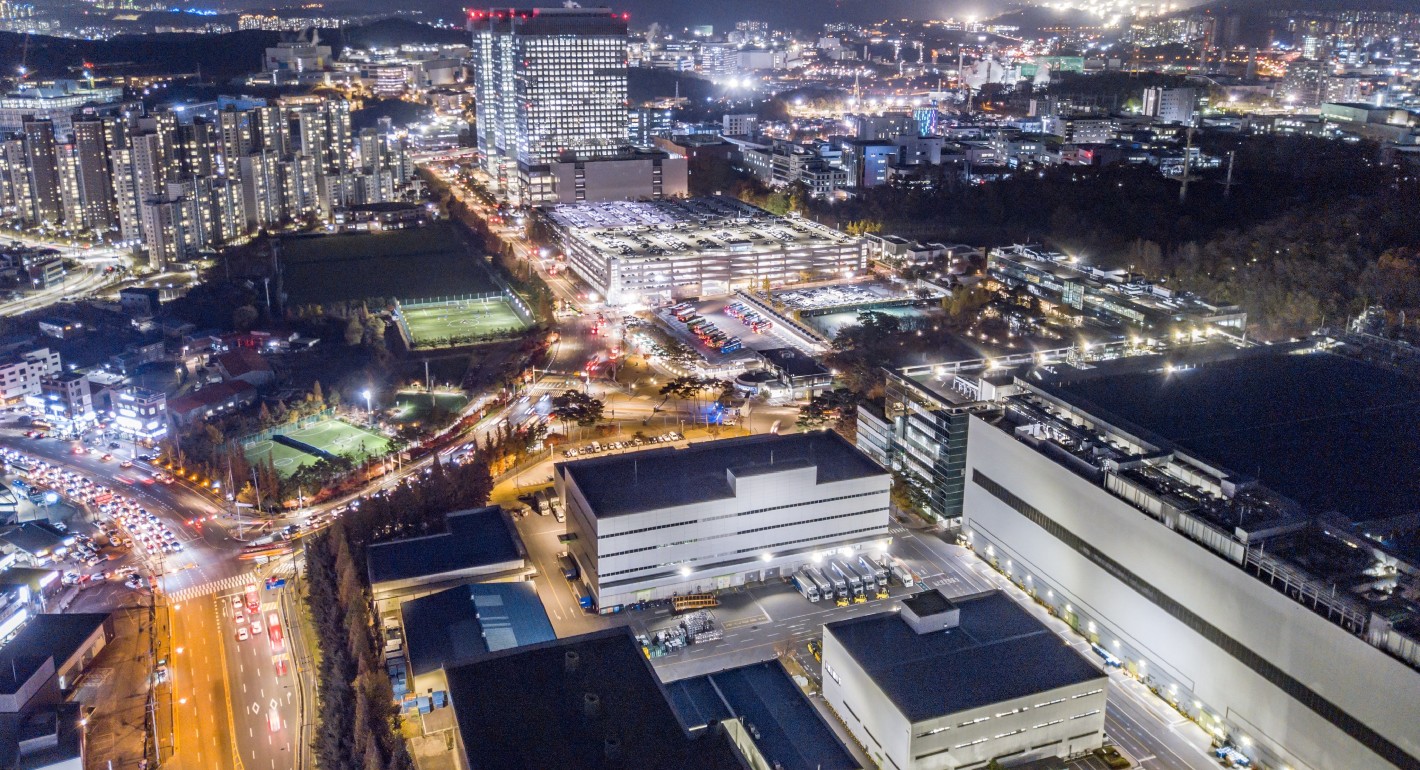
The Samsung semiconductor factory in Hwaseong, South Korea, in 2019. (Photo by Ed Jones/AFP via Getty Images)
The conflict is exposing the deep energy vulnerabilities of Korea’s chip industry.
The Iran conflict has triggered dramatic economic effects across the globe, but despite its location far away from the warzone, South Korea has felt outsized shocks. The country’s stock market plunged 18 percent in just four trading days—the worst drop since the 2008 financial crisis—and wiped out more than $500 billion in market value as the energy security disruption has cascaded through Korea’s semiconductor-heavy stock market.
But the market panic was only the surface symptom, exposing a deeper structural weakness in Korea’s economy. South Korea suffers from a persistent energy vulnerability, and geopolitical shocks can quickly translate into acute economic pain. When these shocks threaten the conditions that allow major industries—particularly Korea’s booming semiconductor trade—to operate smoothly, the entire economy feels it immediately.
In other words, the Iran war and closure of Hormuz did not create this problem. Instead, it revealed how a decades‑old dependence has become far more dangerous for an energy-poor economy.
Korean industry depends on power generated largely from imported fossil fuels—especially oil and liquefied natural gas (LNG). Fossil fuels dominate Korea’s energy mix: oil accounts for 36.6 percent of primary energy use, followed by coal (22.3 percent) and natural gas (19.7 percent). And South Korea imports roughly 70 percent of its crude oil from the Middle East, according to data from the Korea International Trade Association. Virtually all of that oil travels through the Strait of Hormuz.
Among the industries fueled by that oil is Korea’s world-leading semiconductor industry. The country’s two largest chipmakers, Samsung and SK Hynix, form the backbone of the Korean chip industry, making up nearly 40 percent of the Korean stock market’s capitalization. This week, each lost more than 20 percent of their market value over two trading days, before partially recovering as the market stabilized.
For years, the mismatch between Korea’s energy import needs and the electricity demands of advanced chip manufacturing have placed the country’s semiconductor leadership at great risk. (We argued as much in our 2025 report on a Korean “clean chip” strategy.) Switching to more self-sufficient alternatives such as nuclear, solar, wind, and biofuels has lagged, despite the country’s longstanding commitment to a clean energy that spans both progressive and conservative administrations. Even among electricity sources less dependent on Middle Eastern suppliers, coal (33 percent) still tops nuclear (31 percent).
Korea’s energy demand will only increase as the country pushes for greater chips output. The world’s largest chip complex, currently under construction in Yongin, Gyeonggi Province, and scheduled to partially open in 2027, is designed to strengthen the country’s dominance in global memory-chip production as AI-driven demand accelerates. But this ambition comes with a steep cost, and energy is at the center of its development challenges. According to an energy assessment by the Gyeonggi Research Institute, the Yongin complex will need 16 gigawatts of energy to operate. National peak demand is around 94 gigawatts, so the complex would demand roughly 17 percent of peak national electricity.
Korea’s energy dependence carries global consequences. Because Korea leads key segments of the memory‑chip market, disruptions to its energy supply would reverberate through global technology supply chains.
Together, Samsung Electronics and SK Hynix dominate the global semiconductor market, accounting for 80 percent of high-bandwidth memory (HBM) and nearly 70 percent of the DRAM market. HBM and DRAM are two of the most important memory technologies underpinning modern computing, powering AI systems and cloud data centers as well as smartphones, automobiles, and industrial computing systems.
A 2024 news report suggested that Korea’s high energy costs—which rose over 60 percent between 2020 and 2024—have driven many of its manufacturers overseas, mostly to the United States and Southeast Asia, where power costs are lower. This exodus includes a 1,000-acre semiconductor hub in Taylor, Texas, which expands on its Austin facility (built in 1996).
Even with more chip production located outside Korea, the effects of any disruption will ripple far beyond Korea’s borders. The AI boom has driven up chip prices to historic highs, and the biggest tech companies already have purchased multiyear contracts for advanced memory chips—leading to a shortage in the industry even before the Hormuz traffic stalled.
In other words, the Iran conflict has revealed yet another strategic chokepoint: The world’s most important memory‑chip producers depend on energy supplies that move through some of the most geopolitically volatile waterways on Earth.
The lesson of the current crisis is that securing Korea’s semiconductor leadership now requires securing the energy system that powers it. Two steps are particularly urgent.
First, Korea must expand reliable domestically sourced energy resources to reduce its dependence on imported fossil fuels.
Other semiconductor economies have begun aligning energy policy with industrial strategy and economic security. Like South Korea, Taiwan imports 95 percent of its energy and sits at the nexus of several strategic maritime trade routes. Yet Taiwan’s leading chipmaker, TSMC, has committed to sourcing 100 percent renewable electricity by 2040—treating clean power not just as climate policy but as a strategic foundation for semiconductor competitiveness and energy security.
For an energy-poor country whose most important industry depends on stable electricity, Korea must view domestic power capacity as a strategic economic priority. Seoul has already begun pursuing this shift through a combination of nuclear expansion and renewable investment, while pledging to phase out coal plants by 2040. Most recently, President Lee Jae-myung has reiterated a commitment to expanding locally generated renewable power. Strengthening Korea’s energy security will require expanding renewable generation nationwide, particularly in the Seoul metropolitan region and neighboring Gyeonggi Province, where a large share of the country’s electricity demand is concentrated.
Korea should also build on a recent legislative amendment that removes local distance restrictions that have long limited solar deployment, in order to allow an acceleration of clean energy to come onto the grid. Ramping up these efforts would reduce exposure to global energy shocks while supporting the rapidly growing electricity demands of semiconductor production and AI infrastructure. And coupled with Korea’s battery storage industry—the second best in the world after China’s—homegrown solar will boost Korea’s energy autonomy. The sun is not being choked at Hormuz.
Understand the world with the latest from our scholars around the world.
Second, Korea must modernize its electricity grid by removing regulatory barriers that slow transmission expansion.
Streamlining grid regulations and expanding decentralized smart-grid infrastructure would allow semiconductor clusters to connect more easily to secure domestic power sources while supporting energy-intensive industries such as AI data centers. Some steps are already underway. In 2026, Gyeonggi Province and Korea Electric Power Corporation agreed to build new transmission lines beneath a planned highway corridor to deliver an additional 3 gigawatts of power to facilities in the Yongin semiconductor cluster. Institutionalizing similar coordination between infrastructure and power transmission will be critical if Korea is to expand semiconductor production without the decade-long delays that have historically plagued major grid projects.
The Iran war did not create Korea’s energy vulnerability. It simply demonstrated how dangerous that vulnerability has become. In an era when the global digital economy depends on Korean memory chips, ensuring that those chips can be powered reliably is no longer just an energy issue—it is a matter of economic and technological security.

Fellow, Asia Program
Darcie Draudt-Véjares is a fellow in the Carnegie Asia Program.

Tim Sahay
Co-Director, Net Zero Industrial Policy Lab, Johns Hopkins
Tim Sahay is the co-editor of The Polycrisis at Phenomenal World and the co-director of the Net Zero Industrial Policy Lab at Johns Hopkins University.
Carnegie does not take institutional positions on public policy issues; the views represented herein are those of the author(s) and do not necessarily reflect the views of Carnegie, its staff, or its trustees.

By burying disagreements in imprecision, the new deal risks same fate as its predecessors.

James M. Acton
The United States and Israel may have unwittingly revived the Islamic Republic’s “zombie regime.”



Suzanne Maloney, Aaron David Miller, Karim Sadjadpour
The Islamic Republic’s words and actions suggest that it has changed its approach to both diplomacy and war.
Mohammad Ayatollahi Tabaar
Why the outcomes of the U.S.-China meetings may be limited.
Aaron David Miller, David Rennie

Instead, governments should adopt climate-friendly measures to address the impact of rising prices.

Henok Asmelash